October Secondary School of Vitebsk District was named after Hero of the Soviet Union Ivan Sobolev


Ivan Sobolev did everything in his power to help liberate our land from fascism. And in peacetime, he invariably stood guard over the interests of his native country.
Ivan Pavlovich was born in 1907 in the village of Shapyry, Vitebsk District, into a peasant family. After completing seven years of schooling, he worked in Vitebsk at the tool factory. He served in the Red Army, and in 1931 graduated from the Leningrad Military Engineering School. After that, he was assigned to the Kiev Military District, and in 1939 participated in the liberation of Western Ukraine.
From the first days of the Great Patriotic War, he fought on the front lines. He took part in battles on the territory of Ukraine, was seriously wounded, but was saved by local residents. Lieutenant Colonel Ivan Sobolev, commander of the 19th Separate Motorized Pontoon-Bridge Battalion, ensured the organization of crossings and the forcing of water barriers by our troops from Stalingrad to Berlin and Prague. He distinguished himself particularly in September 1943 during the crossing of the Dnieper River. Subsequently, by the Decree of the Presidium of the Supreme Soviet of the USSR of October 26, 1943, for exemplary performance of combat missions of the command and the courage and heroism shown therein, Ivan Sobolev was awarded the title of Hero of the Soviet Union.
After the war, Ivan Petrovich continued his service in the army. In 1955, he retired with the rank of colonel. He lived and worked in Vitebsk, headed the city and regional councils of veterans, and was involved in the military-patriotic education of youth.

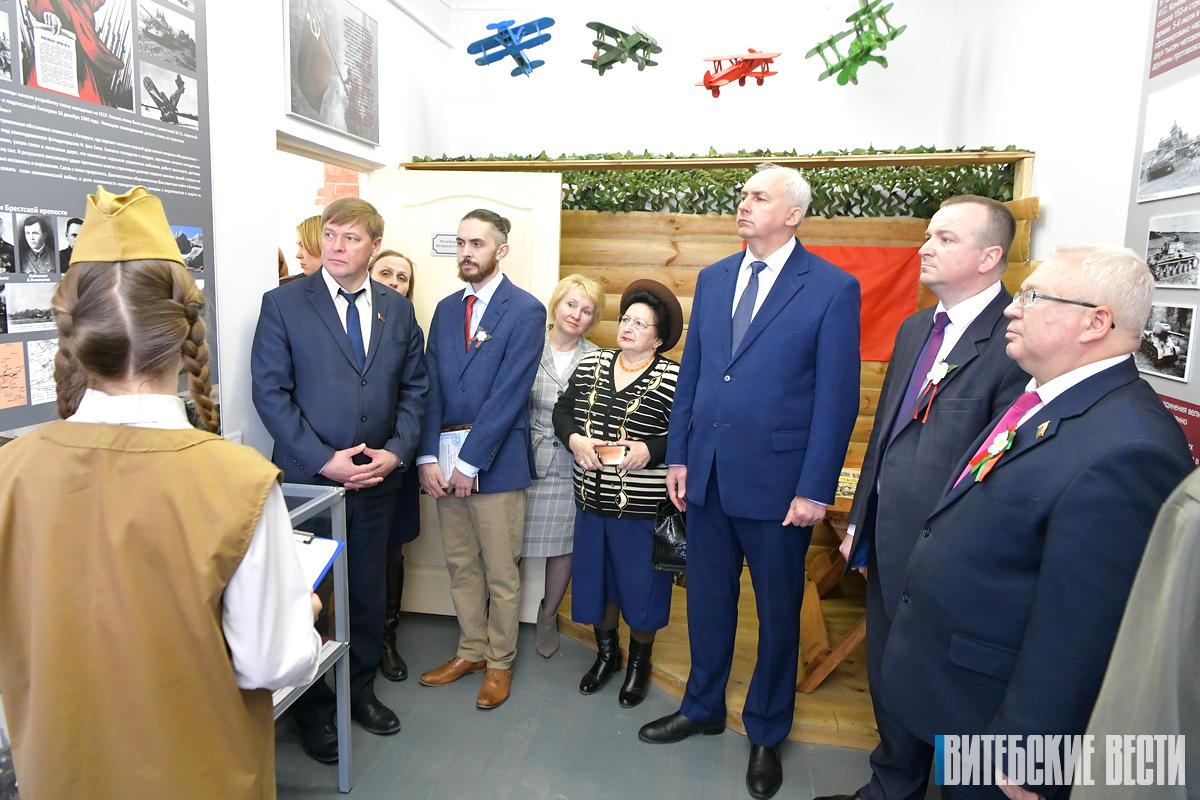

It is about him and other defenders of the Motherland, whose fates are closely linked with the Vitebsk region and its liberation from the Nazi invaders, that the exposition of the museum room dedicated to the history of the Great Patriotic War, opened today at Oktyabrskaya Secondary School, tells. The red ribbon was cut in a solemn ceremony by Vladimir Terentyev, Chairman of the Vitebsk District Executive Committee Gennady Sabinich, and the school principal.

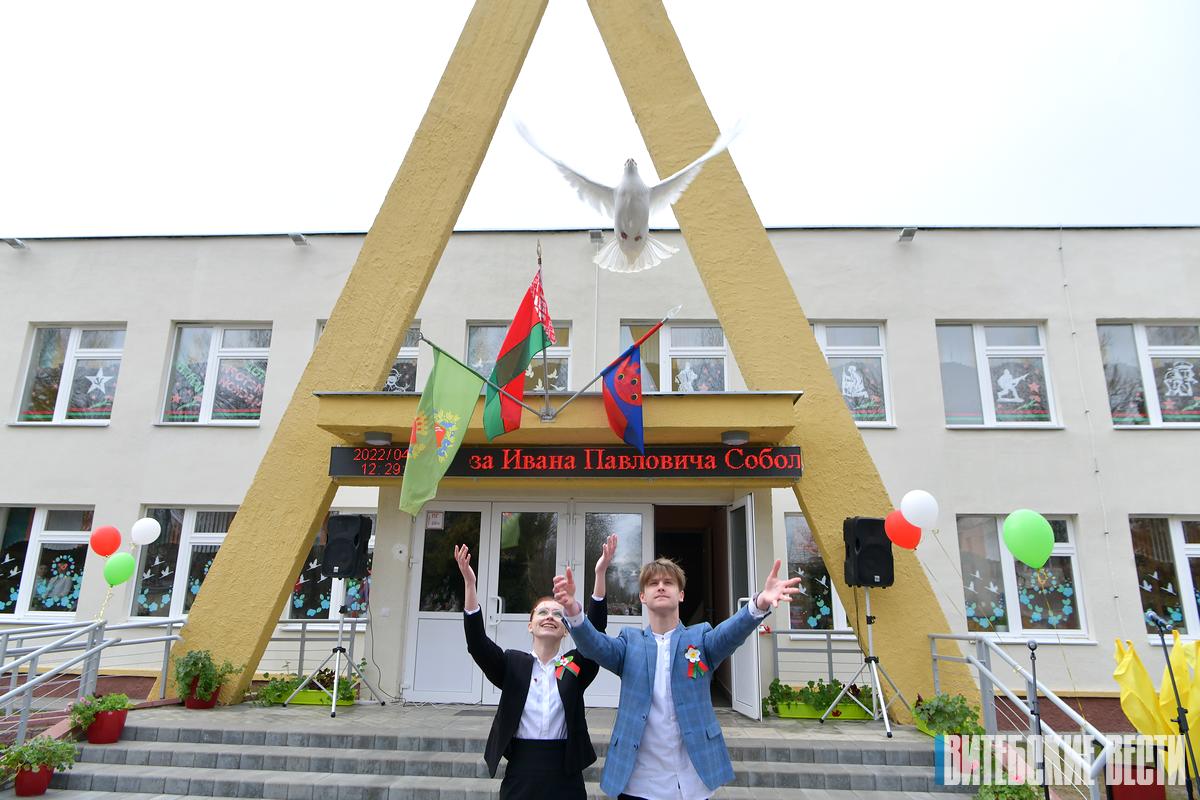
The exhibition was not created from scratch; it is based on materials from the Museum of National Glory that existed in the educational institution last century, explained history teacher Tatyana Diklova. From those times, for example, there are letters from veterans, correspondence with relatives of Soviet soldiers who died in the Vitebsk region and are buried in the common grave in the village of Shapyry. The preserved exhibits have been supplemented with new ones, and now the museum room will help introduce the younger generation to the events of the past, and educate schoolchildren as true patriots who know the historical truth.
– We have revived a good tradition that came from the Soviet Union – perpetuating the memory of our heroes by naming educational institutions after them, – noted Vladimir Terentyev. – I would like to mention the flagship role of the Vitebsk region. This is the ninth school in the region that bears the name of its countryman, Hero of the Soviet Union.
The head of the Vitebsk region's deputy corps noted that similar work is being carried out throughout the region. Moreover, educational institutions do not just receive someone's name; this is preceded by painstaking research work.